Now, picture yourself finally having movie night with adequately buttered popcorn and a streaming queue full of your latest obsession. Now, let’s get into some low-budget acoustic magic that shall make movie nights infinitely better.
1: Your New Best Friend Is the Door Draft Snake
The draft beneath your door appears to be safe since it allows cold air to enter. Do not deceive yourself, though; you are letting in more than simply frigid air. It’s an acoustical highway. To fix this problem and create an acoustical barrier, you can purchase an instant draft stopper or “door snake” that usually costs about ten bucks. The most DIY-handy of you can even create your own draft stopper out of an old tube sock full of rice, beans, and/or fabric. Just push it hard against the edge of your door.
But don’t stop there. Take a closer look at the sides and top of your doorway. A roll of adhesive foam tape weatherstripping costs five dollars and works like magic for this job. Just peel, stick, and press. That’s it. You will see what a big difference it makes, especially from noises that try to crash your movie party.
2: Curtains That Serve Two Purposes
Ditch those flimsy decorative curtains gathering dust. Layered, heavy drapes are soundproofing superheroes disguised as interior design. Look for thick textiles used as window curtains, such as suede, velvet, or moving blankets. Heavy drapes may be found at many thrift stores and low-cost home goods stores for a small portion of the original price. The more sound a cloth absorbs, the denser it is.
Installation counts to Allow the drapes to drip slightly on the floor and mount your curtain rod as close to the ceiling as you can. As a result, there are no holes at the top or bottom of the sound barrier. Layer two sets of curtains for additional credit; one is an inside layer that absorbs sound, and the other is a decorative exterior layer. Your windows block noise from outside and prevent your epic surround sound from bothering the neighbour’s.
Just make sure that you are covering the whole window frame and not just the glass area. Those sound waves can be sneaky, finding little openings to escape through; so, generously overlap those panels.
3 The Awesome Bookshelf Wall
Where function meets soundproofing brilliance: books absorb sound. Line your bookshelves against the common walls, and you suddenly get budget acoustic treatment that shows off your personality. The irregular surfaces of spines diffuse sound waves, stopping echoes and taming the sound transmission through walls. Plus, this is finally your legitimate excuse for keeping all those paperbacks.
Fill every shelf densely, as any gaps reduce its effectiveness. Mix in books of varying sizes to create different surface textures that scatter the sound in multiple directions. If you don’t have enough books (no judgment), add in decorative storage boxes, vinyl record collections, or board games to fill out the space. The goal is mass and texture, not literary prestige.
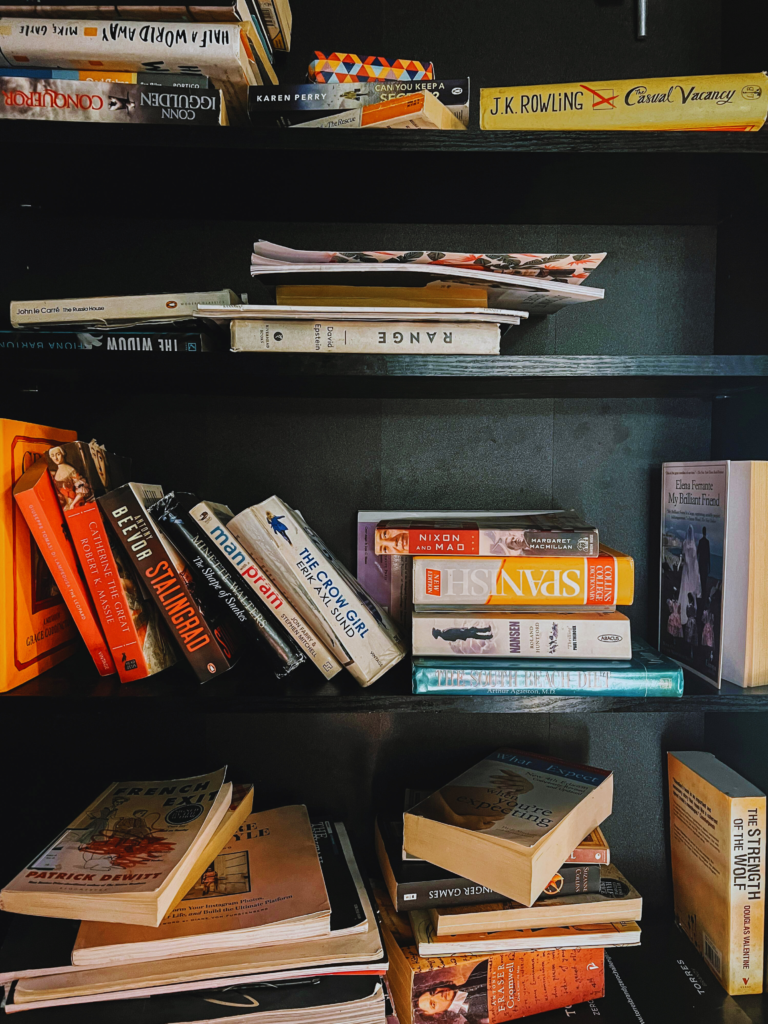
Place the tallest, fullest shelves on the wall you share with neighbour’s or other rooms. Sometimes, even a single strategically placed bookshelf reduces sound transmission amazingly.
4 Acoustic Victory with Furniture Tetris
Your furniture placement is more crucial to soundproofing than you think. That blank wall is essentially a sound wave trampoline.
Add dimensions to your home theatre design. Do not place all furniture pieces against the walls; rather, position some pieces to add depth. A Strategic position of a couch against the wall with a gap of a few feet will create a sound barrier as it will hamper sound waves. Area rugs placed under the furniture arrangement will add sound insulation.
Pay attention to the angles as well. Sound will reflect off parallel surfaces like a ping pong ball, making standing waves and echoes. Position your seating at an angle or use an accent screen at an angle within a corner to eliminate those parallel surfaces.
5 The Pro Secret: Moving Blankets
However, surprise, surprise. Moving blankets that can be found at the hardware store cost twelve dollars each. However, this heavy and thick material absorbs sound waves better than anything else, and you could hang it on the wall like curtains or even surround it with a frame.
Secure them to the walls at the back of your speaker units or the wall that faces your seating area. Use cup hooks or command strips designed for heavy objects—no holes to drill! You can go the extra mile and sew channels in the top for curtain rods if you’re artsy. The industrial aesthetic may not win any design prizes, but necessity trumps design when costs are a concern.
Drape moving blankets over wooden frames made from one-by-two pieces for a tidier appearance. For less than twenty bucks, you may create your own acoustic panels by stapling the cloth across the back.
Place several about your room for optimal sound reduction.
6: The Enchantment of Large-Scale Vinyl
Okay, so this one costs a little more, but it is still not too awful when compared to purchasing soundproofing materials of the highest calibre. This is known as mass loaded vinyl, or simply MLV. It’s thick, heavy stuff meant to dampen sound. Sometimes, you can get some used or leftover bits on some websites for cheap, which would give you enough for a door or a wall area where there’s some issues with sound leakage.
MLV’s ease of use is one of its benefits. A single item placed thoughtfully on your loudest wall may have a profound impact.
Look for bargains on local classifieds or used building material stores, because often contractor’s leftovers will be sold for pennies on the dollar.
Use the MLV in combination with the following techniques on this list for maximum effect. It can be layered behind the moving blankets and/or the wall hangings for maximum absorption and sound blocking.
7: Acoustic Panels from Household Items
Think of all the old blankets, towels, and bathrobes you have stashed in your linen cabinet. Well, those are now going to be used as acoustic treatment. Just drape the material over some crude wooden frames made from scrap wood, even from cardboard if it’s sturdy enough.
Set up these home-made panels at reflection points – the areas on the side walls where reflections of sound emanating from your speakers would naturally reflect to your seating position. You can do the mirror trick – sit in your main seating position and have someone hold a mirror on the wall while the mirror reflects your speaker. Place the panel on this point.
8: Your room only must be improved, not perfect.
I mean, you’re not going to build the Abbey Road studios in your bedroom. You’re not going to achieve complete acoustic separation—the point is to achieve improvement on a budget. By combining three to four of these steps, your room will go from an echoey box to a decent home theatre.
The easiest, most economical approaches must come first. These simple steps may provide a solution to eighty percent of your audio problems on their own. Only later add more layers, subject to available funds. Even small increments in soundproofing result in substantial gains.
It is time to make sure that your home theatre system improves your life and not yourself. With those frugal approaches above, you can get that area where the motion picture boom has nowhere to boom, the dialogue is crystal clear, and only you know what you’re viewing. Now is the time to fire up the popcorn and your favourite DVD movie since your sound-deadened environment is set for its premier.
Pros
Concentrate on low-cost options that can be found in commonplace objects like blankets, towels, and books that generate sound so that any home may be soundproofed.
provides detailed directions for each DIY treatment, allowing the reader to act immediately without the need for any specialized equipment or experience.
It emphasizes cumulative and incremental progress, with valuable information such as the importance of prioritization for improvements, starting with the simplest solutions, since perfection is not always possible.
Cons
Possibly underestimating the effectiveness of “door snakes” or bookshelves, offering low frequency sound isolation, but no attenuating effect upon low frequency sounds, like a subwoofer, which can easily transmit through the structure.
May result if the techniques for the installation of hanging moving blankets are widely used regardless of the aesthetics of the surrounding environment by the readers.
ignores important safety concerns which might include the danger of fire when hanging non-fire retardant cloth (such as moving blankets) near electrical or heat sources.
📚Reference
1: America’s Acoustical Society (2024). “Sound Absorption Coefficients of Common Building Materials.” The Acoustical Society of America Journal.
2: (2025) National Association of Home Builders. “Cost-Effective Soundproofing Methods for Residential Spaces.” Publications of the NAHB Research Center.